 The global hospitality industry is undergoing a quiet but consequential transformation—one driven not by technology or design trends, but by demography, mobility, and worldview. Baby Boomers, born between 1946 and 1964, now number more than 72 million in the United States alone and control an estimated 50–55% of U.S. household wealth. They are also the most internationally experienced generation in history.
As this cohort enters its next chapter, its travel behavior is shifting decisively away from transient hotel stays and toward extended living in historic, international destinations. This migration is not about escape or retirement; it is about choice, continuity, and belonging—the freedom to live abroad with intention, ease, and cultural depth.
I describe this moment as The Art of Intentional Departure: the point at which accomplished individuals stop merely passing through destinations and begin curating how—and where—they live globally. It represents a structural redefinition of luxury itself.
- From Accumulation to Alignment
Baby Boomers are the primary drivers of the projected $68 trillion intergenerational wealth transfer, yet their priorities differ markedly from previous generations at the same life stage. This is not a cohort withdrawing from the world; it is one redefining engagement.

Rather than accumulating physical assets or pursuing novelty, today’s active Boomers are reallocating discretionary income toward experiences anchored in place, history, and rhythm. Industry data consistently shows that Boomers account for more than 40% of global luxury travel spending, reflecting not only spending power, but discernment shaped by decades of international exposure.
They are no longer seeking “the next destination.” They are seeking places with permanence—historic cities, countryside villages, and culturally rooted communities where life unfolds slowly and meaningfully.
Private curated residences within these environments support this evolution. Unlike a three-night hotel stay, residential hospitality enables immersive international living, where stays extend for weeks or months, allowing individuals to participate in local life while maintaining the ease, comfort, and service standards they expect.
- Historic Settings, Modern Ease
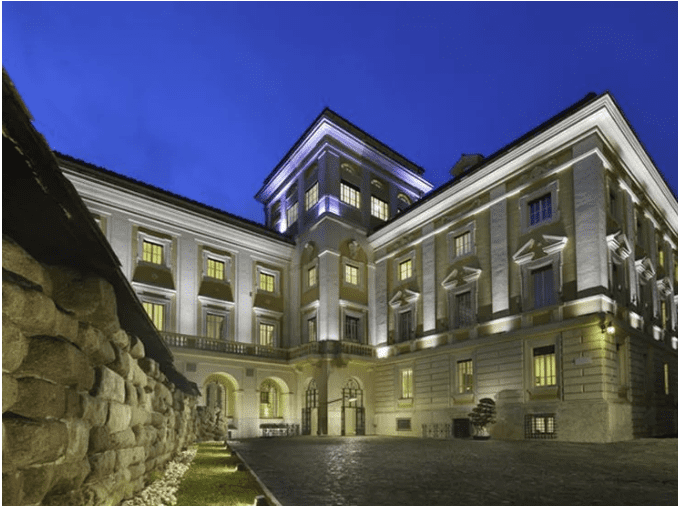
For this generation, privacy remains the ultimate luxury—but context matters just as much. Boomers are drawn not to anonymous luxury, but to authentic settings shaped by centuries of history, architecture, and tradition.
Increasingly, they are choosing private curated residences in historic districts, vineyard regions, coastal villages, and heritage towns—places where daily life is rooted in culture, nature, and continuity.
At the same time, many are consciously opting out of the complexity of international ownership. What they seek instead is curated access without obligation: residences that are professionally managed, secure, and fully supported—without the permanence or administrative burden of owning property abroad.
This has fueled demand for residential hospitality models that combine historic authenticity with modern ease—what might be described as invisible hospitality: anticipatory care that preserves privacy, autonomy, and freedom.
- The International Empty Nester
A defining feature of this movement is the rise of the international Empty Nester—financially secure, globally fluent, and newly unencumbered. With careers established and children launched, this cohort is redefining the concept of home.
Rather than downsizing, they are expanding geographically—choosing to live seasonally or cyclically across countries, often returning to the same historic destinations year after year. Familiar cafés replace hotel lobbies. Local shopkeepers replace concierge desks. Daily rituals replace itineraries.
Belonging, in this context, is not ownership. It is recognition. It is returning to a village where one is known, welcomed, and woven into the rhythm of local life.
This is luxury defined by agency and cultural immersion, not excess.
- Residential Hospitality as a Global Framework
From a broader industry perspective, the migration toward international residential hospitality reflects a structural shift in how luxury is delivered and experienced. The integration of private residences within historically significant destinations—supported by professional management—creates flexibility for travelers and stability for operators.
For affluent Boomers, these models align seamlessly with a desire for optionality: the ability to live abroad deeply without overcommitting capital or responsibility in multiple countries.
The convergence of hospitality, heritage, and lifestyle access is no longer niche. It is becoming foundational to the next era of global luxury living.
The Future of Luxury Is Not Occupancy — It Is Belonging
The Silver Revolution signals a clear mandate for the hospitality and lifestyle sectors: evolve beyond transactional stays and standardized luxury.
Today’s Boomer is active, discerning, and internationally oriented. They seek depth over novelty, freedom over permanence, and belonging over possession—particularly in destinations rich with history, culture, and meaning.
The future will favor those who can create pathways for intentional international living—where individuals do not simply visit a place, but return to it, live within it, and belong to it.
Luxury, in its next chapter, will be defined not by how often one travels, but by how seamlessly one can live well—anywhere in the world.
About the Author
Trica Jean-Baptiste is the Founder and Principal of Left the Nest International, a lifestyle platform designed for Empty Nesters and Baby Boomers seeking to curate life through intentional, international living. Left the Nest International provides access to private curated residences in historic destinations worldwide, rooted in local culture, nature, and heritage—without the obligations of ownership. Left the Nest International
She is also the Managing Director of Morgensheer Hospitality Inc. and a Global Real Estate Advisor with Engel & Völkers Savannah, specializing in aligning institutional investors, family offices, and ultra-high-net-worth individuals with off-market hospitality and residential assets.
A 25-year hospitality veteran, Trica has represented globally respected luxury brands including Rocco Forte Hotels and Dubai Tourism. She is the author of Operation Reset: A Guide to Reinvent Your Career in Any Economy. Her work sits at the intersection of intentional living, international luxury travel, and residential hospitality strategy.