Contactless technology in hospitality is now a reality. It’s already shaping how hotels operate.
Guests check in without speaking to staff. They order food from their phones. They expect answers instantly and service that doesn’t slow them down.
The demand for personal connection hasn’t gone away. But the way guests interact with your team has changed. They want more control. They don’t want to wait in line, repeat requests, or rely on outdated processes.
This article breaks down where contactless tech fits into the hotel operation. From check-in to check-out, we’ll look at how it supports teams, improves flow, and sharpens the guest experience at every stage.

If you’re rethinking how your hotel handles service, this is where to start.
Learn more: Digital Concierge for Hotels: Delivering Guest Service at Scale.
What Is Contactless Technology?
Contactless technology in hospitality refers to any system that lets guests access services or information without relying on face-to-face interaction. It covers tools like digital check-in, mobile ordering, chat-based requests, and on-device room access.
These tools remove manual steps from everyday service. That makes the operation faster and less dependent on full staffing.
What It Looks Like in Practice
Contactless systems step in where delays usually appear:
- Guests check in on their phone instead of queueing at reception
- Room keys are digital, not plastic
- Menus and compendiums are scanned, not printed
- Orders are placed directly from the guest’s device
- Requests and updates flow through chat instead of the front desk
Every one of these changes reduces pressure on your team. Staff aren’t pulled off-task to answer the same questions or chase simple actions.
What Is Contactless Payment Technology?
Contactless payment is just one part of the wider system. It uses Near-Field Communication (NFC) to let guests tap their card or phone on a terminal and pay instantly: no PIN, no signature, no handoff.
For hotels, it means:
- Faster transactions at checkout or the bar
- Less physical contact at payment points
- Compatibility with mobile wallets and chip cards
- Reduced cash handling for staff
It’s familiar tech for most guests. In hospitality, it supports the flow, but it’s not the full picture.
Why Contactless Technology is on the Rise
Hotels are adopting contactless tech because service needs to move faster.
The pressure points are clear: leaner teams, rising costs, and guests who expect immediate service without queues or delays. Contactless systems support that shift by making routine interactions faster and simpler.
What’s Driving the Change?
- Guest behaviour has moved on
People are used to self-managing their experiences. Checking in through a phone, ordering from a QR menu, tapping to pay. These behaviours are now habits, and they’re flowing naturally into hotel stays. - Staffing levels remain tight
Hiring and retention remain difficult in hospitality. Contactless tools give stretched teams breathing room by reducing the number of tasks that need human input. - Hygiene matters to guests
Low-touch service is now a convenience standard. Many guests prefer options that don’t involve shared touchpoints or unnecessary interaction. - Cash is no longer the norm
The use of cash has dropped sharply. The Reserve Bank of Australia reports it fell from 69% of all payments in 2007 to just 13 percent, 15 years later. Most guests now expect to tap a card or use mobile wallets. In fact, most businesses are allowed to refuse cash, except in certain regulated situations. - The technology is easier to implement
Older systems were hard to manage. Today’s contactless solutions are lighter, faster to deploy, and often integrate directly into existing platforms.
Hotels are adopting contactless tech to keep service moving when staff numbers are down, and guest demand keeps rising. A well-structured Digital Hotel Compendium takes pressure off the front desk by giving guests instant access to the information they need.
Contactless Technology in Action for Guests
Contactless technology only matters if it holds up under pressure. In modern hotels, it already does. From check-in to check-out, it’s reshaping how guests interact, while reducing pressure on staff and improving service consistency.
Arrival
- Check-in is now digital
Guests scan a QR code or use a pre-arrival link to confirm their ID and receive their room number. Wait times drop, and the front desk team can focus on in-person interactions instead of admin. - Keycards are declining in some markets
With digital keys, guests unlock their room using their phone. The access is secure, tied to the booking, and doesn’t wear out or get lost like a plastic card. Digital key adoption is growing quickly, with clear improvements in guest satisfaction and security.
In-Stay
- Guest directories have gone digital
Instead of flipping through printed folders, guests scan a QR code and browse dining menus, FAQs, hotel services, and local recommendations in real time. - Mobile ordering is standardising F&B service
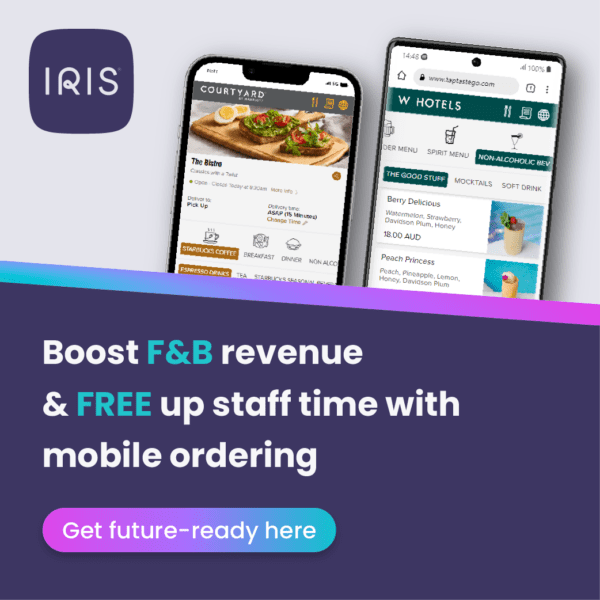
Mobile ordering is one of the fastest ways to reduce staff pressure and keep service moving. A platform like Mobile Digital Ordering lets guests scan a QR code, place their order, and send it straight to the kitchen. - Dining becomes more efficient
When guests choose and customise items themselves, there are fewer order errors and higher average spends. This improves service speed and profitability. - Chatbots handle common guest needs
Wi-Fi info, extra towels, room service updates, all handled automatically through a simple interface. The front desk isn’t swamped with minor requests and guests get faster resolutions.
Check-Out
- Departure is simple
Guests review their bill and check out from their phone. No queue, no paper, no waiting. Charges are clear and the process doesn’t interrupt the guest’s final impression of the stay. For hotels, it also means fewer front desk bottlenecks and cleaner room turnover timing, especially during peak check-out hours.
Contactless workflows remove the pressure from daily operations. Each interaction becomes faster and clearer. Every step of the journey gets sharper without compromising service.
Why Hotels Are Committing to Contactless Tech
The shift toward contactless isn’t easing up. Contactless check-in alone is forecasted to become a several billion dollar global market by 2033, driven by rising guest demand for self-directed service and faster operational turnaround.
For hotel operators, the value goes beyond speed. This is about keeping service sharp when staffing is tight and guest volume doesn’t slow down.
What It Means for Guests
- No delays at arrival
Check-in happens on their device. No queue. No key handover. Straight to the room. - Clear, mobile-first access to services
Menus, booking details, facility hours, and room guides are instantly available. Guests get what they need without having to ask. - Fast, consistent support
Requests are sent through digital platforms and routed automatically. No waiting, no follow-up, no frustration.
What It Unlocks for Staff
- Fewer repetitive tasks
Common requests and manual handovers disappear. Staff focus where they’re most effective. - Cleaner handovers and better coordination
Digital systems track guest needs and activity in real time. Every shift starts with context, not catch-up. - Quicker response, lower stress
Notifications go to the right place. Tasks don’t fall through. Pressure drops.
What It Delivers to Hotel Leaders
- Stronger data visibility
Every interaction is logged in real time: bookings, room service orders, amenity use, and more. This gives managers accurate insights into what’s working, what’s lagging, and where service needs reinforcement. - Increased upsell touchpoints
Guests encounter upgrades, promotions, and add-ons naturally as they interact with the platform. These offers appear when interest is high, without relying on staff to remember or initiate the conversation. - Improved cost control
With clearer insight into guest preferences and service usage, properties can forecast staffing, inventory, and spend more accurately. That tightens up budgeting and reduces waste across departments. - Better guest feedback
When services run smoothly, guests notice. They experience fewer delays, less confusion, and more autonomy. That leads to stronger reviews, fewer complaints, and a higher chance of repeat bookings.
See how properties are reshaping operations and running leaner, more consistent service at scale with tools like Hotel Digital Solutions.
Key Technologies Powering Contactless Hospitality
Contactless service is built from a set of integrated technologies, each handling a different part of the guest experience. The best platforms don’t bolt these on. They bring them together into one smooth workflow.
What to look for in a hotel chatbot
The most effective chatbots integrate with core property systems to route requests automatically. They support multilingual workflows and operate seamlessly across multiple locations without reconfiguration. They’re designed to reduce response latency and maintain consistent service standards even in lean staffing environments.
Digital Check-In and Mobile Keys
Digital keys are issued directly to the guest’s device and sync with the property’s PMS in real time. Access parameters, such as room assignment and check-in/check-out times, are automatically enforced. This eliminates the operational complications of lost cards, manual reprogramming, and front desk delays.
How the system works behind the scenes
Orders go straight from the guest’s device to the right prep area, without needing a server to write, repeat, or relay anything. The system handles real-time menu updates, modifiers, upsell prompts, and full payment at the point of order. That means fewer mistakes, faster delivery, and smoother handoffs between service and kitchen.
Digital Compendiums
Digital compendiums replace static, printed directories with real-time, guest-facing content. The strongest platforms allow instant updates across multiple properties, support rich media like video and image galleries, and apply brand styling without development work. That keeps content accurate and fully in sync with operational needs.
Amenity and Activity Booking
An Activities Booking Platform gives guests live visibility into available spa appointments, gym sessions, or business centre slots, without manual coordination. These systems sync with internal calendars in real time and update guest-facing availability instantly. The result is tighter scheduling and smoother coordination across departments.
It keeps staff in control while putting guests in charge of their own schedules.
Some contactless tools are built for specific needs, like managing gym access and class reservations. How to Choose the Best Fitness Booking Software for Hotels breaks down what to look for.
Challenges to Consider
Contactless tech solves a lot of problems, but only when it’s implemented with intent. The hotels that succeed don’t just plug in a new tool. They adjust workflows and embed the tech where it actually supports service.
- Training and Adoption
The tool might be simple. Using it properly isn’t automatic.
- Staff need clear onboarding and practical guidance.
- They need to understand how the system works and where they still play a role.
Without proper training, service gaps show up quickly. That damages the guest experience and weakens trust in the system.
- Resistance to Change
New tech can trigger pushback.
- Some teams revert to manual workarounds.
- Others use features halfway or avoid them entirely.
This is where communication counts. Early wins matter. So does leadership buy-in. When a system is seen as optional, it never takes hold.
- Infrastructure and Integration
Even the best platforms struggle without the right setup.
- Legacy systems slow down deployment and create compatibility gaps.
- Tech that doesn’t integrate with POS, PMS, or comms tools creates more work than it removes.
Choosing a system that fits your environment is what keeps your rollout efficient, and your operation stable.
- Cost and ROI
Contactless tech isn’t free. But its value is in what it removes.
- Time lost to repeat requests
- Labour pressure on high-contact service points
- Gaps in guest satisfaction due to delay or inconsistency
If the return isn’t clear, buy-in slips. Tools that are half-used won’t pay for themselves.
Want a breakdown of how to choose guest-facing tech that actually works? Guest Experience Software That Delivers: What to Look For.
Future Trends in Contactless Hospitality
Contactless technology will continue to grow and shift. What’s considered standard today will shift again as guest expectations evolve and hotel systems become more integrated. Operators who plan for the next wave now will have a simpler path forward later.
AI-Powered Service Automation
Hospitality chatbots are already handling requests. The next phase is smarter automation: systems that learn guest preferences and trigger service actions without manual input.
Hotels that combine AI with human oversight will be able to grow service without increasing workload.
Biometric Access and Digital Identity
Digital keys may move towards biometric options. Fingerprint or facial recognition tools can unlock rooms and personalise the stay experience.
This removes anything tedious from check-in and access, especially in loyalty-driven properties where guest return is high.
Personalisation That’s Actually Useful
Contactless tech will increasingly adapt to the guest. Expect systems that remember preferences and surface relevant offers based on behaviour.
Done right, it doesn’t feel like a push. It feels like a service that already knows what’s next.
Consolidated Guest Journeys
One platform. One interface. One guest record.
Hotels are starting to move away from individualised systems where dining, activities, check-in, and service requests all live separately. Expect more demand for platforms that consolidate touchpoints into a single, trackable experience.
Where Contactless Moves from Concept to Capability
Contactless technology is here to stay. It’s an operational necessity that affects every corner of the hotel experience.
At SABA Hospitality, we build contactless solutions shaped by hospitality experience. The kind that understands what pressure at the front desk feels like, and how fast operations need to move when occupancy spikes. Every product we deliver is designed to solve problems that hoteliers actually face, in properties that can’t afford disruption.
For guests, that means fewer delays and more freedom to engage on their own terms. For staff, it clears space to focus on service instead of repeating the same task. And for hotel leadership, it raises visibility and opens new revenue paths.
If you’re ready to elevate your guest experience and run leaner, smarter operations, explore how other properties are doing it with Hotels.