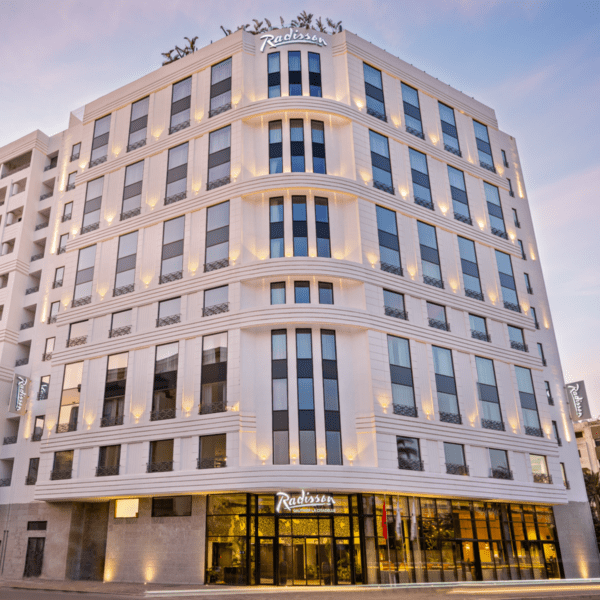
Overlooking the Corniche—a vibrant stretch of coastline in the upscale neighborhood of Aïn Diab—Villa Sahrai stands right at the crux, where the Atlantic meets Casablanca’s urban pulse. A reinterpretation of the city’s modernist mid-century villas, the new-build property has flowing open-plan spaces, generous terraces, and layered interiors reminiscent of an elegant residential complex from the wider Anfa district’s historic past. Uninterrupted views of the ocean, a contemporary take on Moroccan artisanal techniques, and a Mediterranean rooftop restaurant and lounge, all root the hotel in its location and cement its position as both a social hub and sanctuary.
Owned by brother-and-sister duo Anis and Rizlane Sefrioui — also the visionaries behind the Sahrai Hotel in Fez — Villa Sahrai is the second property in the Sahrai Collection, created in collaboration with their longtime friends Adil Lazrak and Ismail Benabdeljelil. What unites the hotels is French architect Christophe Pillet, who was enlisted to design both. Contrasting bold Brutalist lines with softer volumes, the building balances rigorous geometry with emotional materiality. Inside, tactile textures create an enveloping, calm aesthetic. The dialogue between light and shadow—a key feature of Mediterranean modernism—is achieved through large openings, deep overhangs, and sculptural voids.
“From the architecture to the smallest design elements, we hope guests can sense an unwavering attention to detail, a respect for craftsmanship, and a harmonious balance between tradition and modernity,” state Anis and Rizlane. “We believe hospitality is both an art and a responsibility. That’s why you’ll find thoughtful touches throughout: curated atmospheres, intuitive service, and spaces that feel both elevated and personal. These are not just places to stay—they are expressions of our values, our vision, and our commitment to creating something meaningful.”
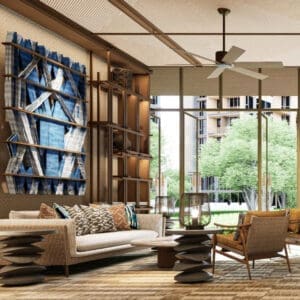
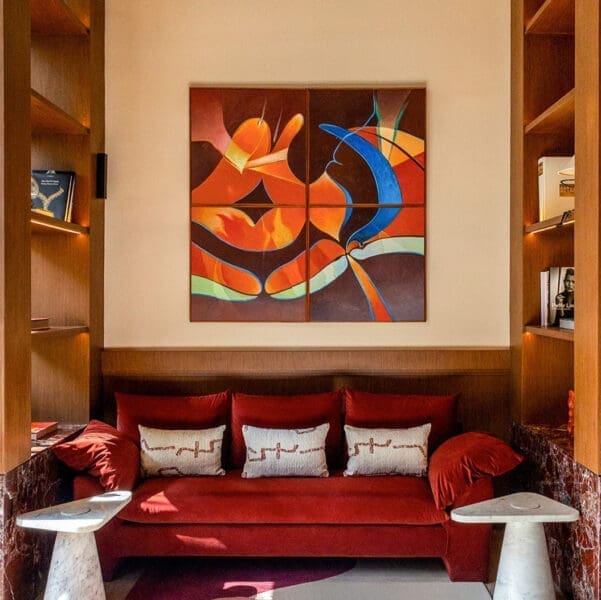
The hotel is conceived as a sequence of sensory moments that start in the salon-like lobby. The vision of Casablanca native, interior designer Ali Lahlou (who was also responsible for the rooms and Rubillini’s restaurant), the serene entrance has a minimalist materials palette: polished stone, natural linen and aged wood. Natural light filters through bespoke screens, casting shadows that shift throughout the day, while the subtle scent of fig and cedar lingers in the air. Furniture is low-slung and inviting, a mix of custom pieces with vintage-inspired silhouettes. Oversized sofas and rugs, ceramics from local Beyt&Co boutique, and artworks from nearby AA Gallery, which specializes in representing African artists, lend a lived-in feel. Photographs by renowned Moroccan-French photographer Cécile Tréal also instill a sense of place while uniforms are designed by local stylist Ali Drissi.

The sophisticated scheme continues in the spacious rooms and suites. A neutral, earthy palette punctuated by warm ochres (terracotta, rich Bordeaux red) that reference the colors of Casablanca’s coastal landscape is complemented with walnut furniture, Tom Dixon lamps, and tan leather bedheads. Original Chinese ink illustrations by French artist Aurore de La Morinerie capture the city’s unique energy. Many rooms come with private terraces, planted with yuccas and night-blooming jasmine, that blur the line between indoor and outdoor. Smoked glass panels subtly separate the bathroom, where Rosso Levanto marble adds depth.
Mediterranean influences are threaded through the two restaurants, Italian trattoria Rubillini’s and L’Aragosta on the rooftop. The latter, by Swiss interior design studio DeerHome Architectures, is the place to be, especially at sunset when DJs take to the decks. Panoramic vistas from the outdoor lounge are framed by structured architectural greenery while the lush interior courtyard unfolds like a hidden garden with plum and olive trees, and ornamental grasses forming an oasis to unwind. A third eatery, Bardo, will pay homage to la dolce vita with a casual menu of aperitivo and pizzas, when it opens in summer 2026.
When guests want to retreat and reset, the spa offers Cinq Mondes treatments, a hammam, sauna and heated indoor pool. To complete the experience, the gym repositions training as a communal activity with boxing, spinning and Pilates Reformer classes alongside personal coaching.
Location
Villa Sahrai is a two-minute walk from the palm tree-lined Corniche and the beach beyond – both popular with joggers, yogis, surfers, and volleyball enthusiasts who often gather for matches on the sand. Cafes, restaurants, and bars are dotted along the promenade. The hotel is well connected by the Tramway, which is ideal for discovering major attractions such as the Art Deco architecture in United Nations Square, Sacred Heart Cathedral, and Arab League Park. For shopping, Anfa Place Mall is five-minutes’ drive; Morocco Mall can be reached in 10-minutes.